AI image generation couldn't do what I needed, so I built a production process around its limitations.
Early AI image generation tools had a well-documented limitation: they responded to words, not intent. Short phrases. Noun stacks. Anything requiring two subjects in a coherent spatial relationship usually collapsed into something that was neither — ask for a man and a bear and you'd get a chimera. The models weren't broken. They just didn't have art direction.
Most people treated the limitation as a prompting problem — write more, describe more, be more precise. I treated it as a workflow problem.
An AI image model is a generative engine — it produces; it doesn't direct. What it needed was an art director. That's a division of labor that looks new but isn't: new technology often works this way, shifting the lower-order work to the tool and moving the person up the chain. The model generates. The creative director directs.
The brief was Meta ads for Essential Elements' T-Hero testosterone line — a supplement brand that needed to stop a scroll, not blend into a feed. An early rough composite, built around the headline "Put the T back in Tough," set the campaign's direction: a man screaming in a gym next to a T-Rex, raw and unresolved. The copywriter pulled it immediately. The campaign would be built around that energy.
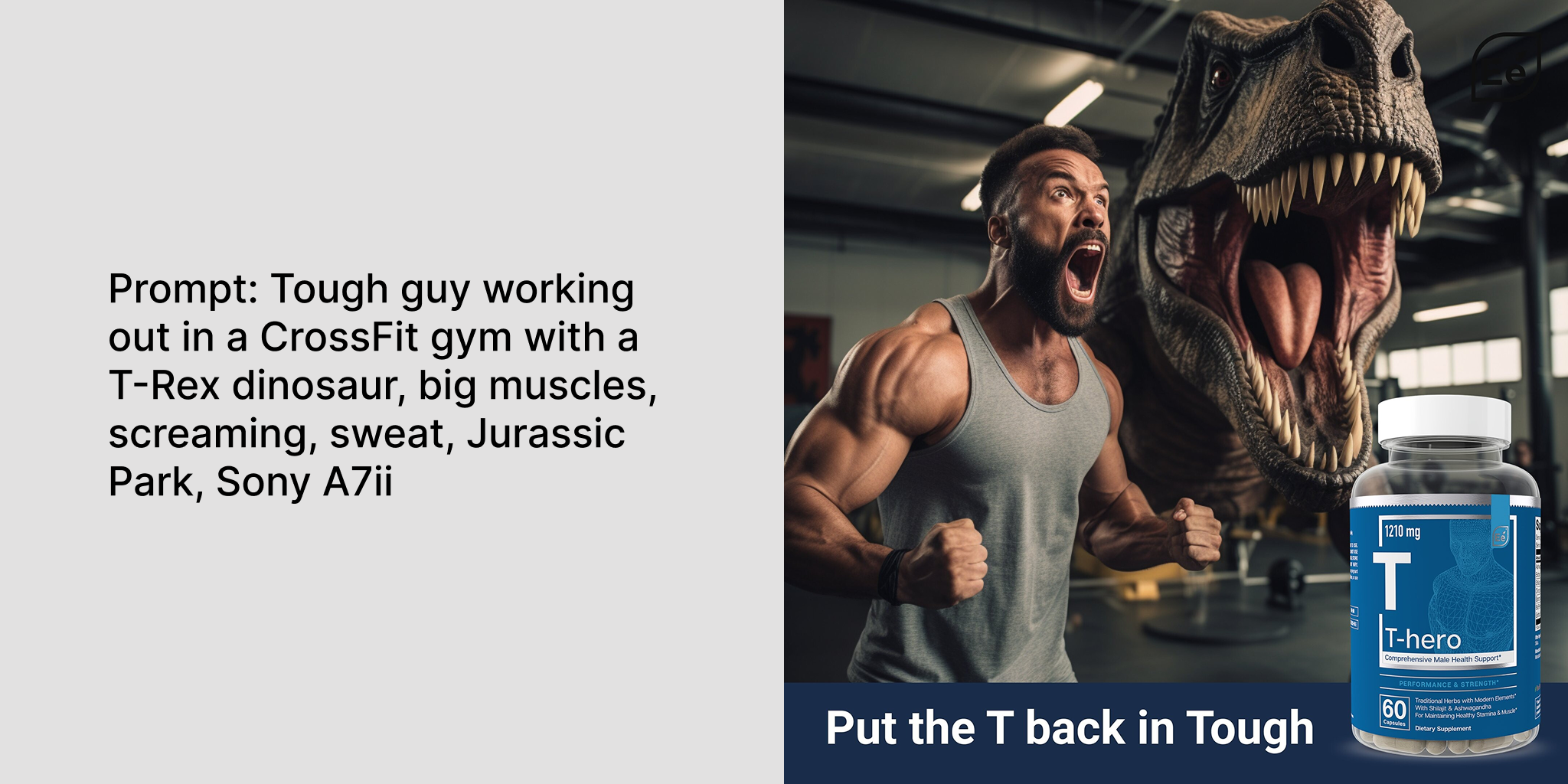
That meant producing a series of ads, each pairing a man and a wild animal in a single dramatic scene. Wolf. Elephant. Bear. Dragon. Cinematic. Coherent. Brand-quality.
Early Midjourney couldn't do that in one shot.
Instead of asking the AI to generate a finished scene, I started treating Midjourney as one part of a larger production workflow, not the whole thing.
Generate each subject separately: the animal in its environment, the human figure independently. Neither output would be final. Composite them in Photoshop to establish spatial relationship, scale, and tension between figures. Then use that composite as a visual reference — feeding it back into Midjourney as an image input, not a text prompt — to push the next generation closer to the intended result. The red shapes marked areas for Adobe Firefly's generative fill to patch in detail before the result went back into the Midjourney loop. Evaluate. Repeat.
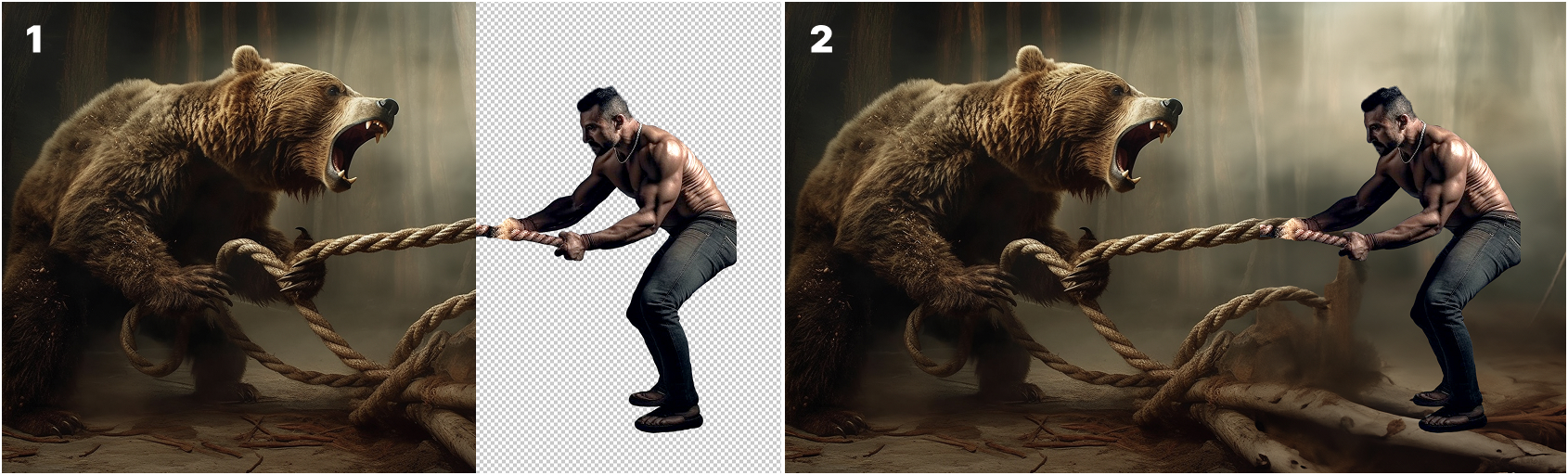
It was art direction. Aimed at a machine instead of a photographer.
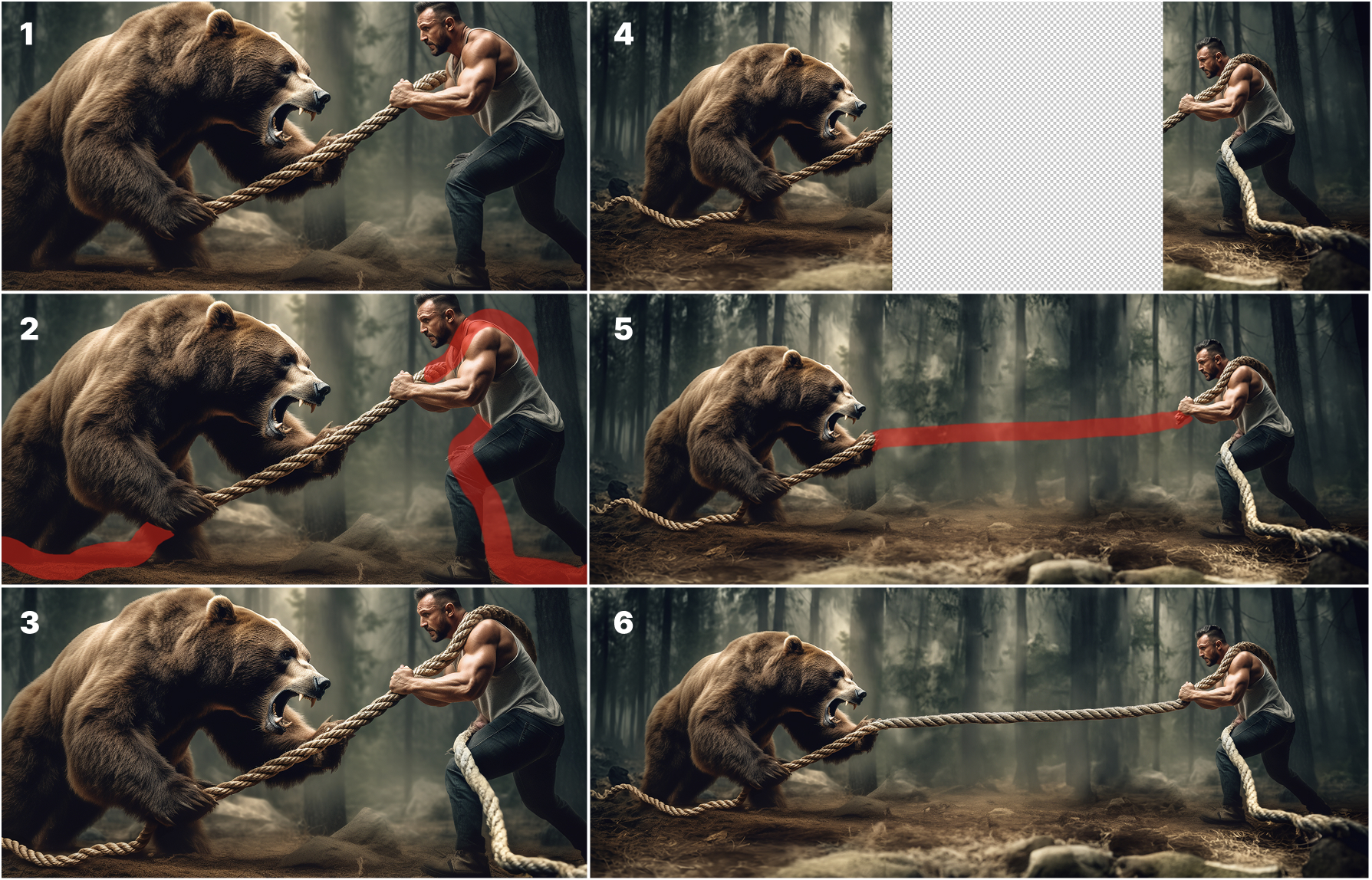
The process was slower than a prompt. It required real Photoshop skill and genuine art direction instincts at every stage. The results couldn't have come from a prompt alone.
This became the production method for everything we built on the T-Hero brand.
Early in the engagement, we developed a wide range of creative directions in parallel — emotional, absurdist, cinematic action. Each required its own generation strategy: different prompt structures, different compositing approaches, different ways of guiding the model toward a specific visual intent.
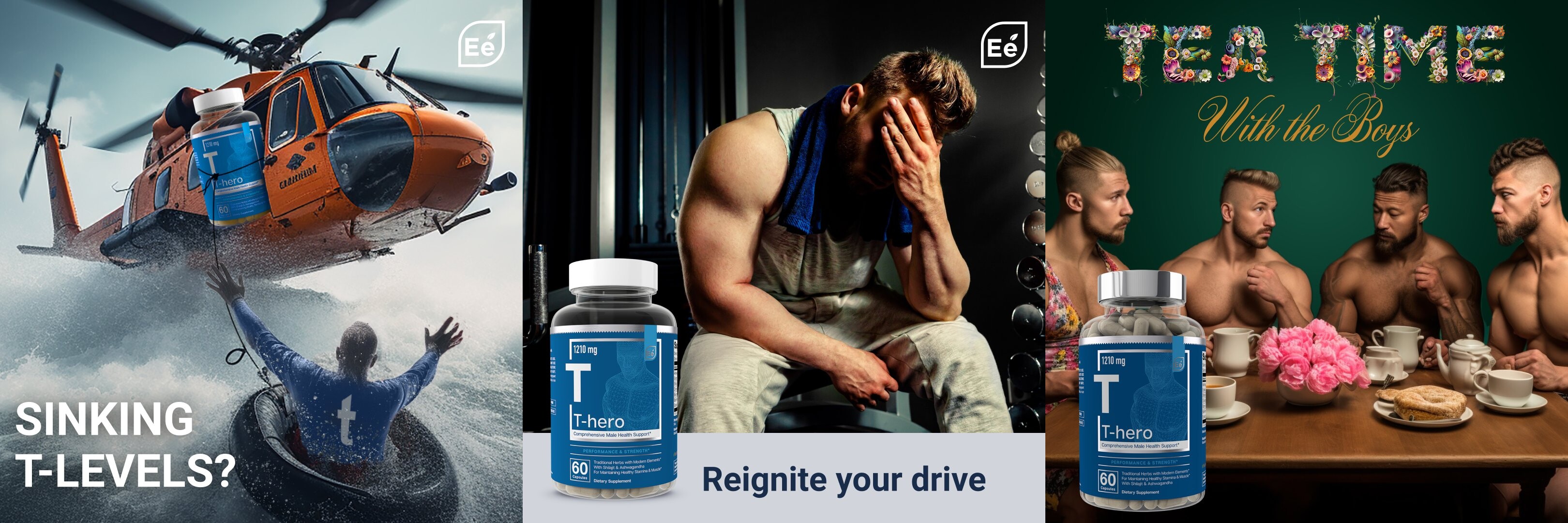
The man-and-animal concept went to market: four ads running on Meta, each pairing a different man with a different animal in a different environment.
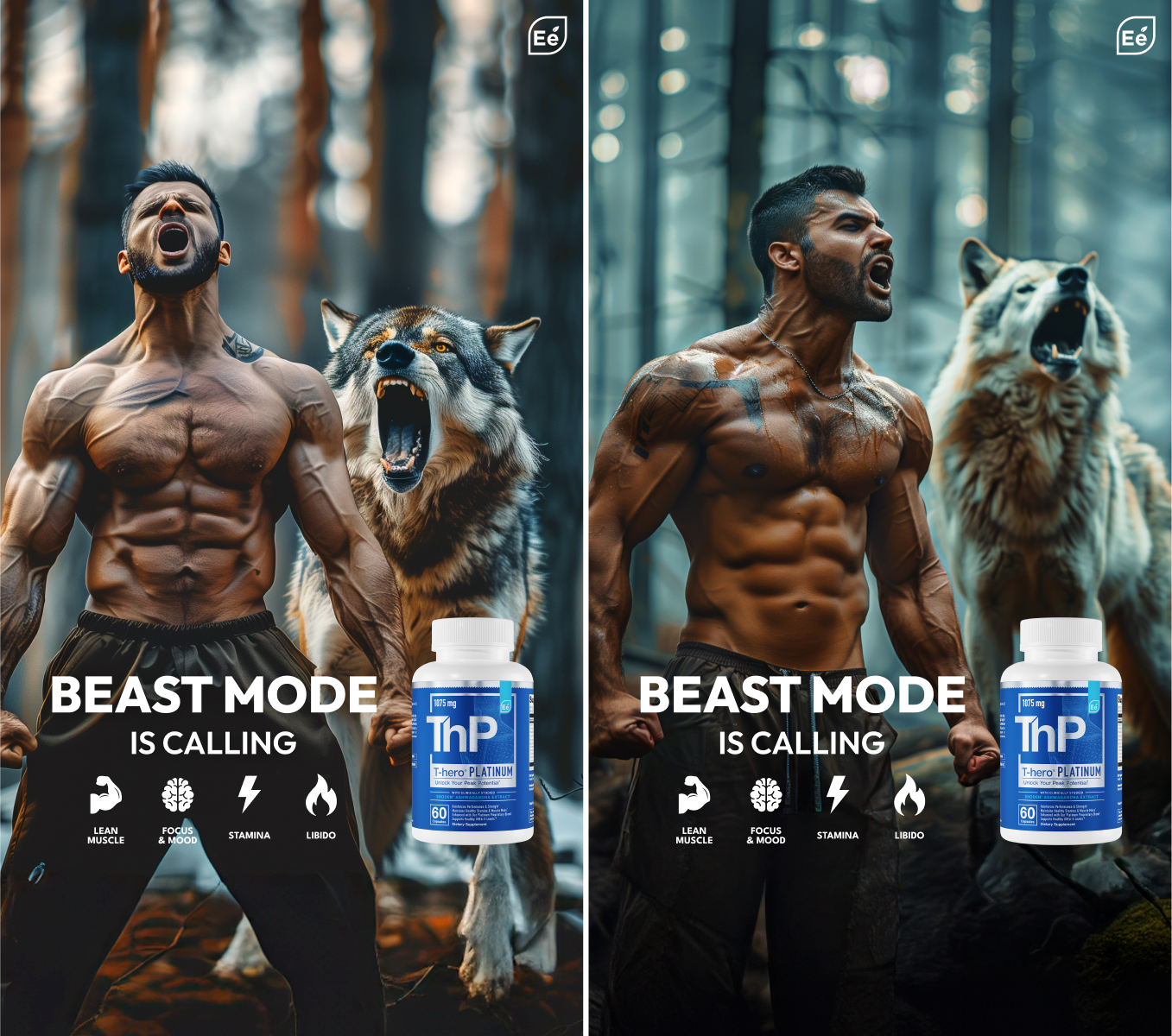
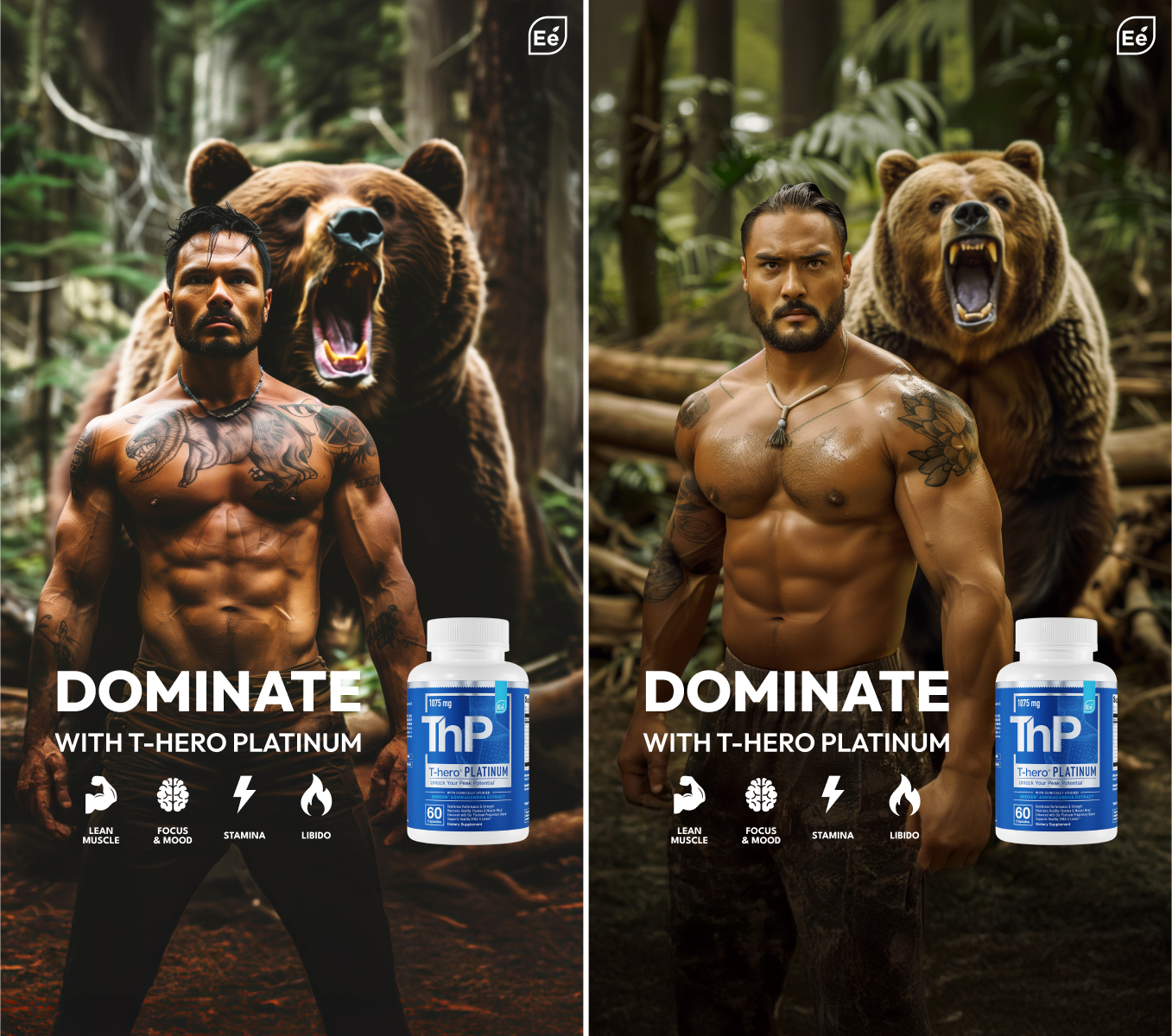
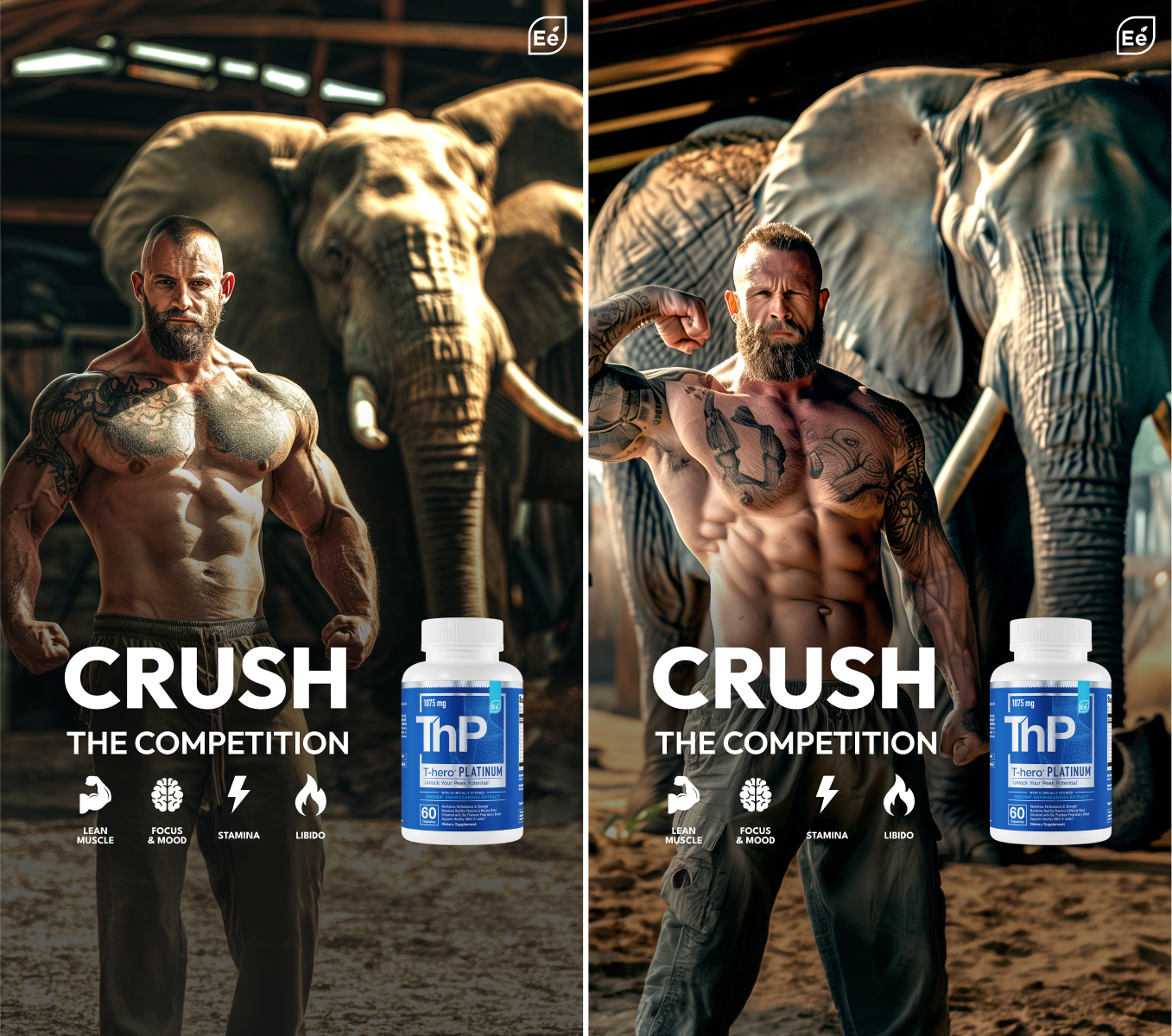
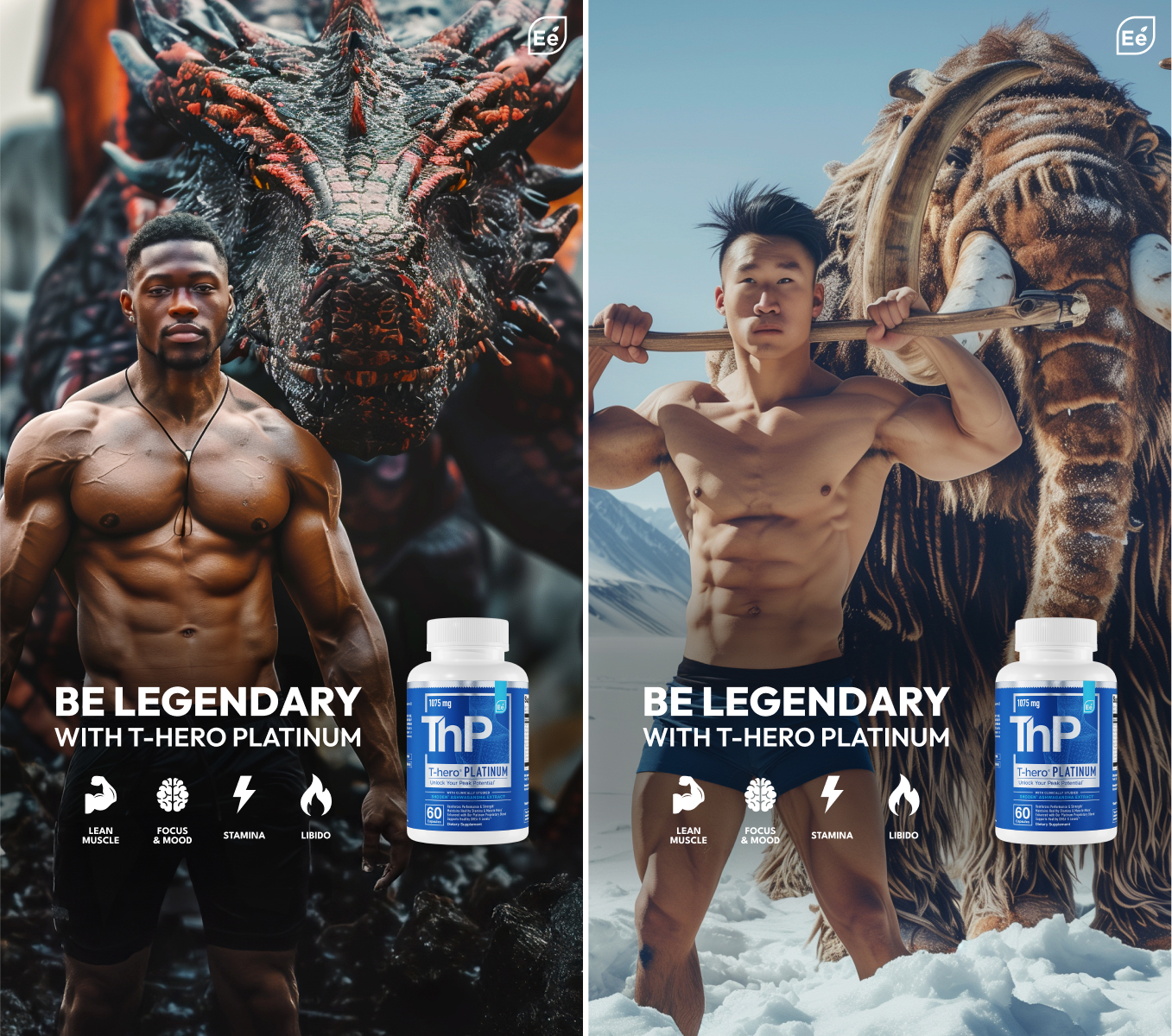
The campaign ran on Facebook and Instagram. Performance data wasn't shared with the creative team, but competitor ads using the man-animal pairing format started appearing in feeds within months of launch. The format didn't exist in the supplement category before this campaign.
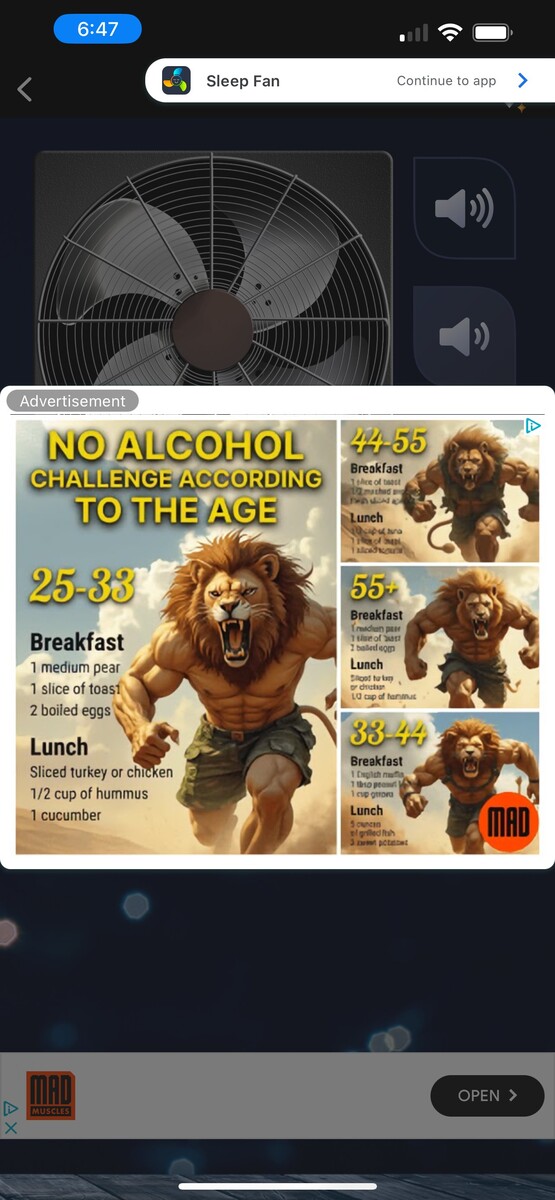
The specific workarounds here were responses to early Midjourney's limitations. Those particular limitations have largely been solved.
What hasn't changed: knowing what a tool can't do, and building a process that gets there anyway.
I’m drawn to strange questions, bold ideas, and the edges of what’s possible. If you’re here to make meaning—or make something beautiful—drop me a line. Don’t be shy. Let’s make something weird and wonderful.